
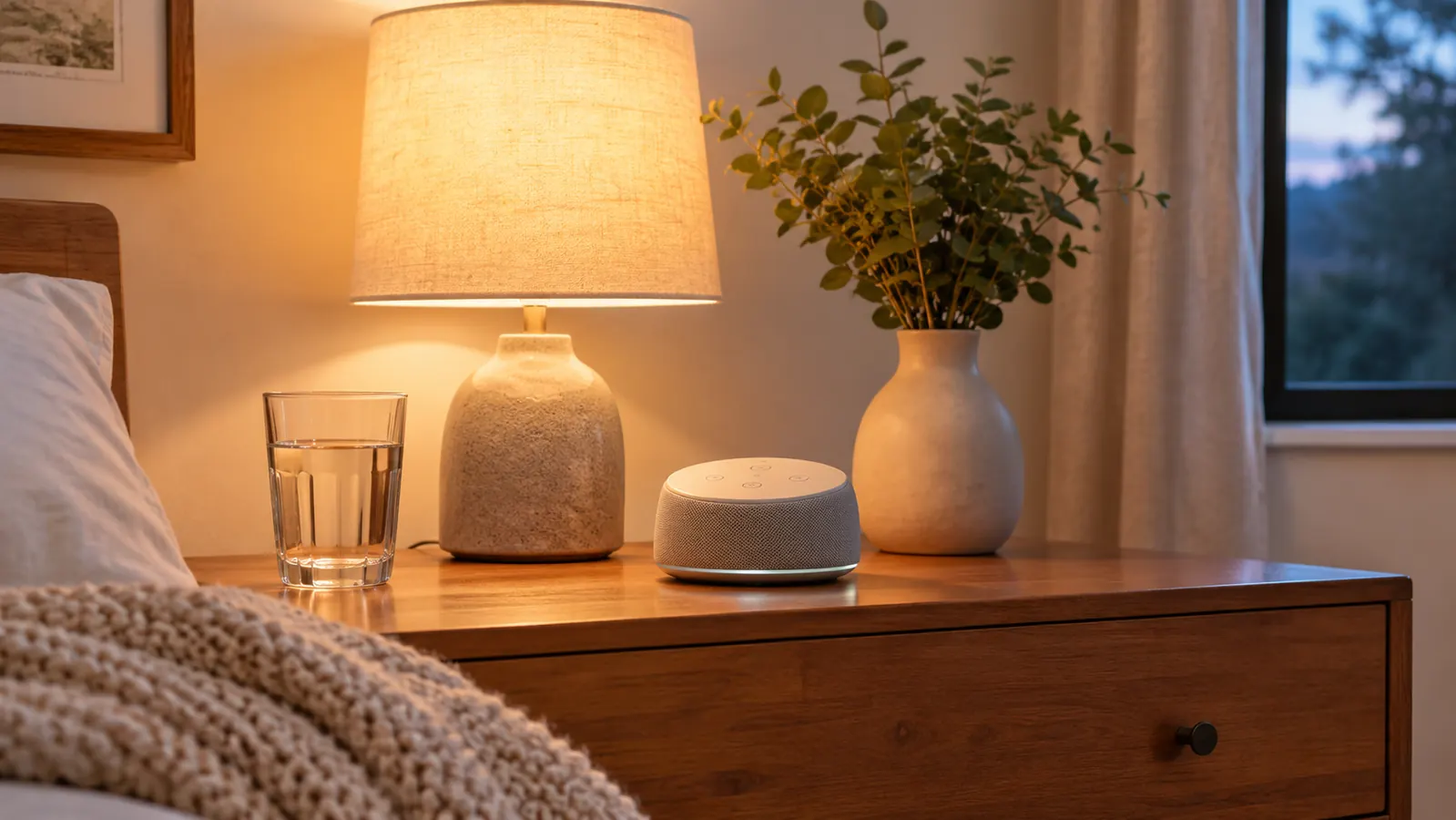
For eleven years the loudest thing in our bedroom was a box fan. It sat on the floor beside the window, and every night one of us leaned down and pushed the button until it clicked over to the highest speed. Dale called it the noise machine long before we owned a noise machine. Then in February, when I finally set up the small bedroom as a quiet room, I bought a Magicteam sound machine and put it on the dresser instead. The fan went out to the garage and has not come back in. Nine months of living with both of them is long enough to say plainly what the fan did better, what the Magicteam does better, and which one belongs in a bedroom where the whole point is winding down.
The short answer, if you are standing in a store aisle or squinting at a screen at ten at night: if the problem is sound, and specifically the sound of a house doing its own thing while you are trying to fall asleep, the Magicteam wins and it is not close. If the problem is air, or a noise loud enough to come through a wall, the fan wins. They overlap on most of the job. They are not interchangeable for the rest of it, and the difference is what I want to lay out before you spend anything.
| Magicteam Sound Machine | Box Fan | |
|---|---|---|
| Sound options | 20 non-looping sounds, including rain, ocean, brook, fan, brown noise and pink noise | One sound, made by the motor and the blades |
| Volume | 32 levels, so you can sit one step above the furnace and one step below a person walking past | Three speeds, and the lowest is still noticeable across a quiet room |
| Moving air | None. It does not cool anything | That is the entire reason it exists |
| Masking a genuinely loud noise | Not its job. A saw or a truck will come right through it | On high it will bury almost anything in the house |
| Footprint | About 2.64 x 2.64 x 2.83 inches and 5.76 ounces, so it takes up a corner of a dresser | Floor space in front of a window, and you plan around it |
| Carrying it to another room | Pick it up in one hand and bring the cord | Two hands and a clear path |
| Timer | Set it for 1, 2 or 3 hours | None. Somebody gets up and switches it off |
| Power | AC adapter or USB cord, and it has to be plugged in to run | Wall outlet only |
| Remembering your setting | Memory function holds the sound and volume you left it on | You turn it back to where you want it every night |
| Character of the sound | A recording, even and steady, with no wobble in it | Real blades moving real air, which has a slight unevenness to it |
| Upkeep | Wipe the outside now and then | Blades and grille collect dust and eventually need taking apart |
Where the Magicteam Wins
Our furnace is in the basement, directly under the hallway, and it announces itself. Not a bang, more of a low settling that goes through the floor and up the wall and into the bedroom at around two in the morning. For eleven years the fan was how we dealt with that, and the fan was not really a solution. It was a swap. The lowest speed did not cover the furnace at all. The highest speed covered the furnace and also covered Dale getting up at five thirty, and also made the room feel like we were sleeping near a small aircraft. There was no setting in between, because there were only three settings. That is the whole argument for the Magicteam, and it is not a fancy one. Thirty-two levels of volume is thirty-two chances to find the single level where the furnace disappears and your husband's footsteps do not.
I found mine on the eleventh night, which sounds like an exaggeration and is not. Levels one through eight were so faint I could still hear the refrigerator through the wall. Somewhere around level fourteen the furnace vanished and Dale's footsteps in the hallway turned into a suggestion. I went one notch higher, to fifteen, and stopped, and I have not moved it since February. That single number is the whole reason the machine stayed and the fan did not. It is also the thing no product page can tell you, because the right number depends on your furnace, your hallway and how hard your husband closes the closet door.
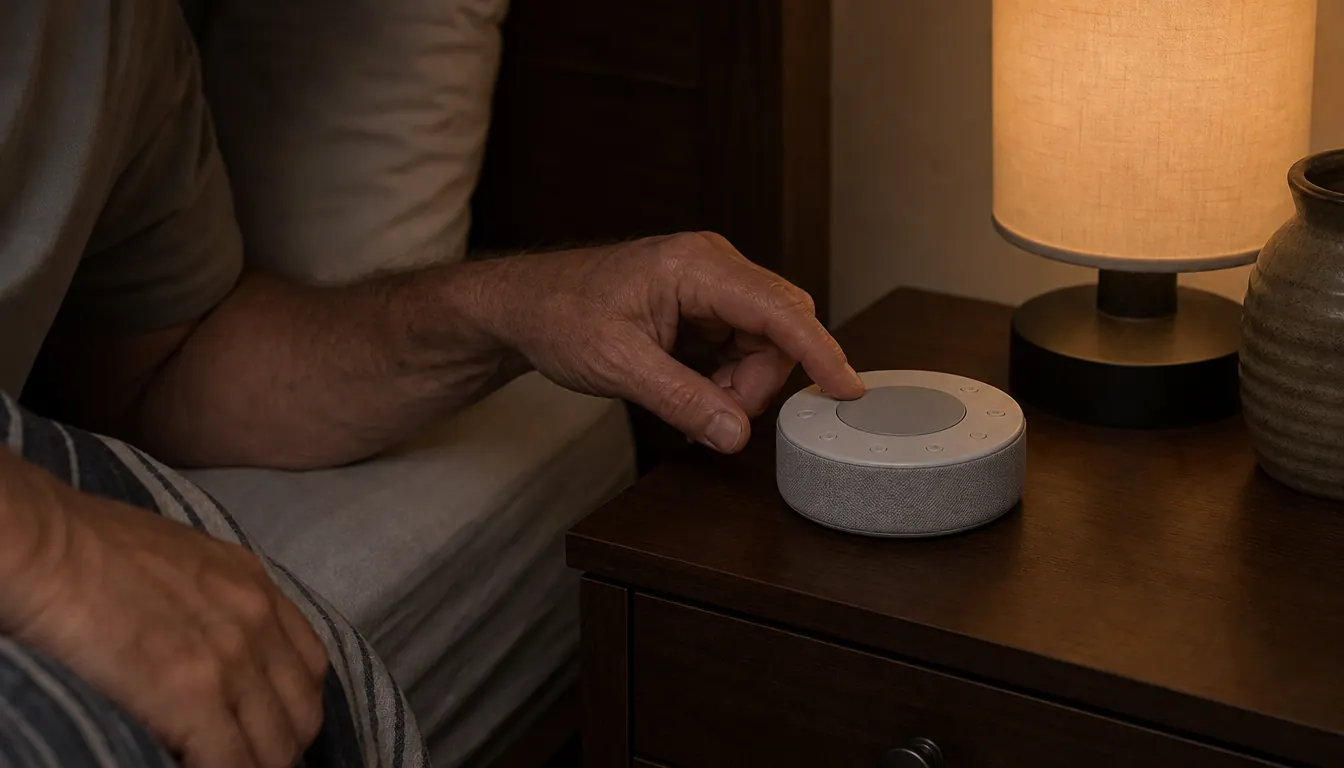
The second thing it fixed was the getting up. We used to turn the fan off when we came to bed, or leave it running and listen to it all night. With the machine, I set the timer for two hours, and by the time it clicks off I am past the point where the house sounds matter. If I wake at three, which I do, the memory function means the machine is not a puzzle in the dark. I press the one button that matters and it comes back to the rain sound at the volume I chose last night. I am not leaning over the side of the bed in the dark hunting for a dial, which is exactly what I did for a decade with the fan.
Of the twenty sounds, I use two. Rain, mostly, and the fan setting when the rain feels too busy. That sounds wasteful, twenty sounds to use two, but I would rather have the choice and ignore it than need a third sound and not have it. Brown noise is the one I reach for when Dale has a cold and the breathing is keeping me up. The machine is also small enough and light enough that I have carried it into the quiet room twice, once when the furnace man was in the basement all afternoon and once during a stretch of August when I wanted the ocean sound while I stretched on the mat. It has to be plugged in, always, which is the one real limitation and worth knowing before it arrives.
Where the Box Fan Wins
The fan moves air. I want to be fair about this because in July and early August, air is not a small thing, and there were nights this summer when I genuinely missed it. A sound machine does nothing for a bedroom that has gone still and warm. It also does nothing for the noise of a neighbor's mower or a truck idling at the curb, because masking a genuinely loud sound takes volume, and the machine at its top setting is a polite little device, not a wall of sound. On the days our street was being resurfaced, I would have traded the machine for the fan without a second thought. If your noise problem is occasional and enormous rather than quiet and constant, that changes the math.
During the four nights in July when I brought the fan back in, the thermometer on the bedroom wall read eighty-one at ten thirty, and the machine was no help at all with that. I ran both of them for two of those nights, which is a silly thing to do and I do not recommend it, and the fan did every bit of the actual work. If you sleep in a room that holds heat, or your window does not open more than a few inches, you already know which of these two you need and the rest of this comparison is not really aimed at you. I put the fan back in the garage on the fifth morning without any regret about either purchase.
There is a second thing, and it is harder to put in a table. The fan was real. The sound of blades moving air has a texture to it, a slight wobble, and some people find that more restful than any recording, even a good one. My sister Joan is like that. She has tried my machine and handed it back and said it sounded like a machine. She is not wrong to prefer hers. What the fan cannot do is be quiet, and that is the failing that finally sent ours to the garage. The fan only had one volume that actually worked, and that volume was the loud one, and after eleven years I stopped being willing to sleep inside that.
The fan had three speeds. The furnace kicking on was louder than two of them and quieter than the third, and after eleven years I was tired of choosing between the furnace and a small aircraft.
If the furnace under your hallway is what wakes you, this is the one to look at
Thirty-two volume levels, a two hour timer and a setting it remembers from the night before. It has to be plugged in, and it does not cool the room. What it does is sit on the dresser at one step above the noise you are trying to forget.
Amazon Check Today's Price on Amazon →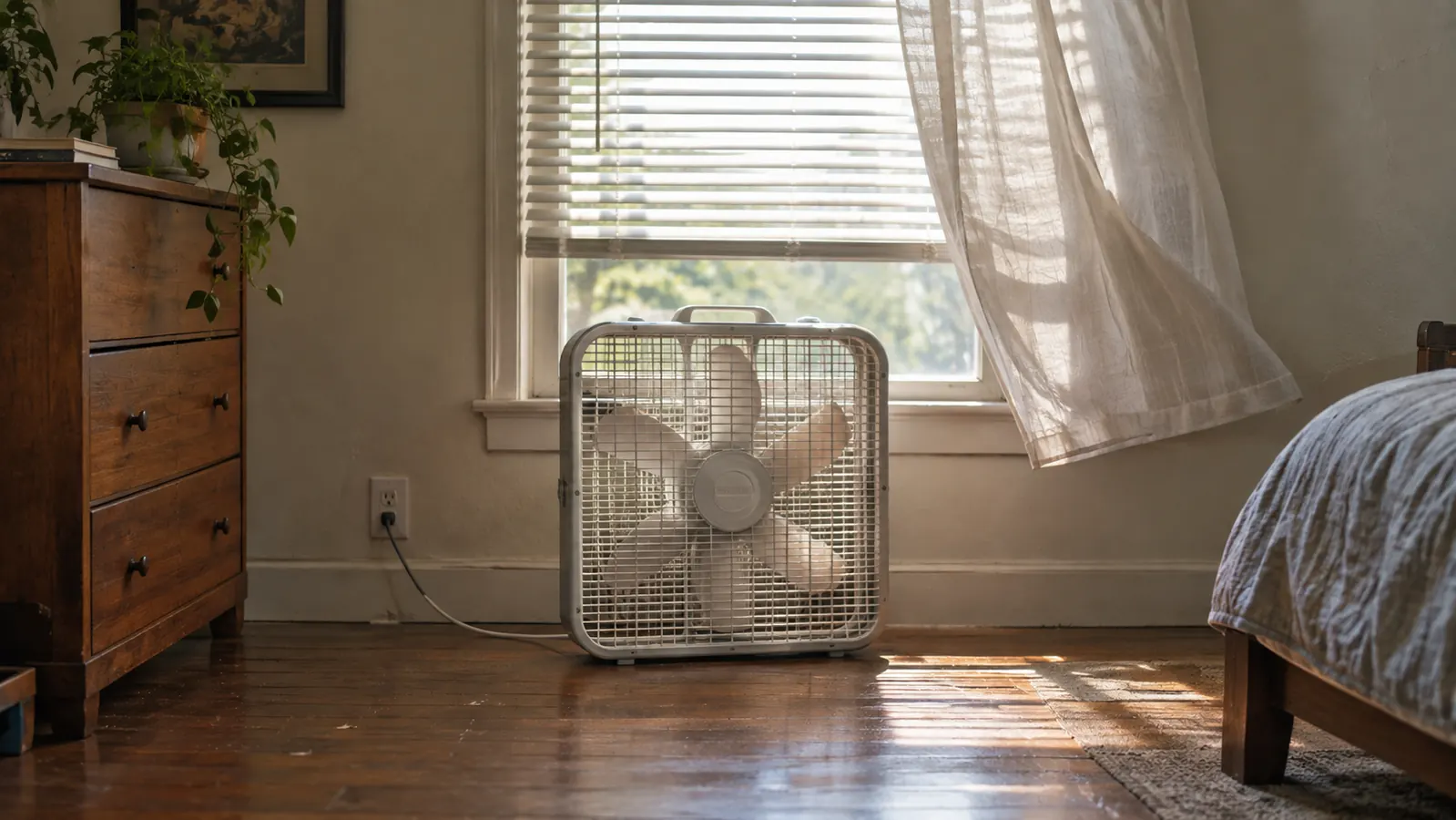
What Nine Months of Each Actually Sounded Like
The first week with the Magicteam I did the thing everyone does, which is try all twenty sounds in one sitting and lose track of which was which. By the third night I had settled on rain at a level about a third of the way up, and I have not moved far off that since. The important thing arrived later, maybe ten days in, when I noticed I had stopped hearing the furnace. Not that it stopped running. That I had stopped hearing it. With the fan I always heard the furnace, and then heard the fan, and did the small arithmetic of whether the fan was doing enough. That arithmetic is gone now, and the absence of it is the actual purchase.
Dale took longer to come around, because Dale does not care for anything that needs a manual. What won him over was the five thirty problem in reverse. He gets up early and the machine keeps me from hearing him dress, which means he does not spend the first ten minutes of his morning trying not to make noise. He still calls it the noise machine. He just says it about the small thing on the dresser now instead of the big thing by the window, which I take as a full endorsement from a man who has never once complimented a purchase of mine without being asked.
The fan sat in the garage from February until June, which tells you how confident I was. I brought it back in for the hot stretch in July and ran it for four nights, and by the fourth night I had turned it off and gone back to the machine. What I noticed in those four nights was the loop. The fan has a rhythm you cannot quite pin down, a small surge every few seconds as the blades pass the grille, and once I had noticed it I could not un-notice it. The machine is built to avoid exactly that, twenty sounds that do not loop, and I could hear the difference in a way I never expected to care about.
There is a maintenance angle I did not think about until the fan left the room. The grille on ours had collected a grey fur of dust over eleven years, and when I finally took it apart in June to clean it before the July stretch, the blades were worse than the grille. The Magicteam has nothing to take apart and no grille to comb out. I wipe the outside with a dry cloth when I dust the dresser, roughly every other Sunday, and that is the entire upkeep. In a room where the whole idea is to stop doing chores in your head, that matters more than it sounds like it should.
Who Should Buy Which
Buy the Magicteam if the noise bothering you is the house itself. A furnace, a refrigerator, a neighbor's heat pump, a spouse on a different schedule, traffic that is steady but distant. Buy it if you have tried a fan and found only two useful settings, too quiet and too loud, and you are tired of picking. Buy it if you want the thing to be small, to sit on a dresser, and to be already set the way you like it when you get into bed at ten thirty. Buy it if you have a reading chair or a quiet room and you would like the same steady sound in both places without buying two of anything. It is a recording, it must stay plugged in, and it will not cool you down in August. Those are the terms and they are reasonable.
One practical note on the size, because I measured the dresser top before I bought anything for it. The machine is 2.64 by 2.64 by 2.83 inches and weighs 5.76 ounces, so it took the corner nearest the wall lamp and left the rest of the top to the lamp, a coaster and my reading glasses. The fan had claimed a two foot square of floor by the window that nothing else in the room could use. I have since put a small basket of books in that spot, which is a better use of a bedroom corner than a fan, and I did not have to move a single piece of furniture to make it happen.
Keep the fan, or buy a fan, if moving air is any part of what you are after, because the machine does none of that. Keep it if your noise problem is loud rather than constant, the kind that shows up twice a week and needs drowning rather than smoothing. And keep it if you have tried recorded sound and it does not sit right with you, because that is a real preference and no amount of twenty non-looping sounds will talk you out of it. Joan is happy with her fan and she is not wrong. She is just solving a different problem than mine, in a house that is not under a basement furnace with a husband who leaves at five thirty.
One small thing on the dresser instead of a big thing by the window
Twenty non-looping sounds, 32 volume levels, a 1, 2 or 3 hour timer, and it remembers your setting for the next night. About 5.76 ounces, so it moves to the quiet room with you. Plug it in, pick your sound, and stop doing the night time arithmetic.
Amazon See Today's Price on Amazon →